Showing posts with label adoptatude. Show all posts

Thursday, June 7, 2012

Adopt-a-tude Says a Fond Goodbye

Well, the time has come for AAT editors and writers to admit to reality: We're busy! Raising kids, working jobs, doing other writing, moving on. After this entry, we'll no longer be posting on AAT.

When I began Adopt-a-tude a few years ago, it was an experiment in group blogging, one that did take off for awhile, possibly because of the sparks flying in the adoption community at the time. The sparks are still flying, of course, but the public discussion of adoption has shifted, too.

I wouldn't say that the cultural "moment" for adoption has passed. But it's no longer big news that many adoptees are determined to get access to their birth records—or that international adoption doesn't always have a happy ending. The increasingly nuanced depictions of adoption in movies and TV means that at least a few consciousnesses have been raised. May we all continue to raise awareness about adoption issues that matter to our families.

I'm currently Editor in Chief of Talking Writing, an online literary magazine, and I'm very open to publishing high-quality personal essays or fiction about adoption. Please check out TW's Submissions page for more information. Fran Cronin, AAT's blog manager, is also a columnist at the magazine and often touches on her experience as an adoptive mom.

So come follow us at Talking Writing, "like" us on TW's Facebook page, and sign up for a free TW subscription. And regardless, thanks for supporting Adopt-a-tude.

All our best wishes to you and your families!

Martha Nichols, founder of Adopt-a-tude

For those who missed it, here's the contents for TW's adoption spotlight last November...


Spotlight: Adoption and Parenting
Celebrate National Adoption Month with TW in November

Melissa Fay Greene
Author Note: Melissa Fay Greene
Two personal takes on No Biking in the House Without a Helmet, Greene's 2011 memoir about her nine children


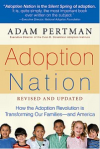
Interview: Adam Pertman
One of adoption's staunchest supporters talks about the latest challenges—and Steve Jobs


Personal Essay
A mixed-race adoptee reflects on the need to create himself

Mei-Ling Hopgood
Mei-Ling Hopgood

Interview: Mei-Ling Hopgood
The author of the acclaimed memoir Lucky Girl has a new book on the way about cross-cultural parenting practices


Thursday, July 22, 2010

Are You My Mother?

By Fran Cronin for Adopt-a-tude


The recent death of open-adoption maverick Annette Baran has jostled me out of my maternal complacency.

Having adopted my son in Russia, I thought I had dodged open adoption blowback: no birth mother back-story, no holiday cards, no photo exchanges or well-intended visits. In other words, there was no ambiguity or messy relational complications. I was sure my son felt snug and secure in the embrace of my unwavering devotion and love. Wasn’t that enough?

But in reading the obits of the formidable and prescient Baran, the firm ballast of my assumptions have begun to wobble.

From the late 1950s to 1974, during a time of closed adoptions—anonymity and sealed records—Baran placed more than 1,000 babies while director of adoptions for Vista Del Mar Child-Care Service in West Los Angeles.

As the placements mounted she wondered why the details were kept concealed when it was obvious that both adopting parents and birth mothers wanted to know more. Each craved the missing installment of their separate but enjoined stories.

The curtain was finally pulled back in 1978, when she and some colleagues published their research findings in the watershed The Adoption Triangle: The Effects of Sealed Records on Adoptees, Birth Parents, and Adoptive Parents. Since then, varying levels of open-adoption practices have become the norm.

Almost single-handedly, and with the strength of her own experience, Baran popularized the argument that an adoptee’s knowledge of their birth parents is crucial to identity formation. She advocated that knowledge filled the empty hollows for all parties in an adoption relationship.

So why have I thought that my complicit ignorance in my son’s birth history has been a good thing? What have I been afraid of?

Perhaps I fear losing a part of my son if we go down the path of “are you my mother?” The broad-shouldered mantle of Mom is not one I have been willing to share. As a single parent, I have fiercely protected and honed my role in solo parenting.

Adopted at five months and now a pubescent 12-year-old, my son has yet to challenge my monolithic claim on motherhood or queried as to whom might be at the other end of his genetic line. But that question does pop into my head. What is his genetic history and what might be his biological destiny?

But even if I knew the DNA of my son’s genetic make-up, I could not stem the inevitable march of his biological destiny. Having survived cancer three times, I know much about my own DNA, but that has not enabled me to redirect my genetic heritage.

While there is no right or wrong answer to the open-versus-closed adoption argument, I feel the choice to unearth the past is my son’s, not mine. Perhaps finding his birth mother would reassure her that the child she bore is thriving and well loved.

Whatever my son’s past might have been, his future is firmly with me, his sister, and the family unit we have lovingly knit into being.

Click here to read more about the life of Annette Baran.

To listen to an interview with Annette Baran go to YouTube.


Fran Cronin is the blog manager for Adopt-a-tude.